Designing a navigation guide for pediatric wheelchair acquisition
Supporting caregivers of Children with Medical Complexity (CMC) through pediatric wheelchair acquisition.
Project Overview
For families of Children with Medical Complexity (CMC), acquiring a pediatric wheelchair is a complex and opaque process that requires significant emotional and logistical labor to navigate.
Working with Ann & Robert H. Lurie Children's Hospital of Chicago, the team focuses on illuminating this complex process through primary and secondary research and designing informational support to assist caregivers through this complex system with greater clarity and confidence.
Key Research Questions
- What is the pediatric wheelchair acquisition journey like, centered on caregivers’ experiences? - What information do caregivers need to better navigate the process?
Project outcome
Designed a navigation guide that makes the journey more visible and navigable for caregivers.
The guide includes both a high-level overview and a detailed, phase-by-phase interactive booklet, supporting caregivers across the entire wheelchair acquisition and usage lifecycle.
My Role
Design Researcher · Information Graphic Designer
The Team
Rhea Shah - researcher & designer
Ashlyn Spilde - researcher & designer
Angela Petrone - researcher & designer
Arundhuti Bhattacharya - researcher & designer
Richa Sharma - researcher & designer
Tomoko Ichikawa - supervising faculty
industry
Pediatric Healthcare
Mobility Device Acquisition
Food & Beverage
Design attributes
Navigation Guide
Information Design
Skills
Generative and evaluative research · Analysis and synthesis Comparative testing · Stakeholder workshop facilitation · Storytelling · Ecosystem mapping · Persona development · Journey mapping · Graphic design
tools
Figjam, Figma, Microsoft Excel, Mural
timeline
Aug - Dec 2025 (14 weeks, part-time)
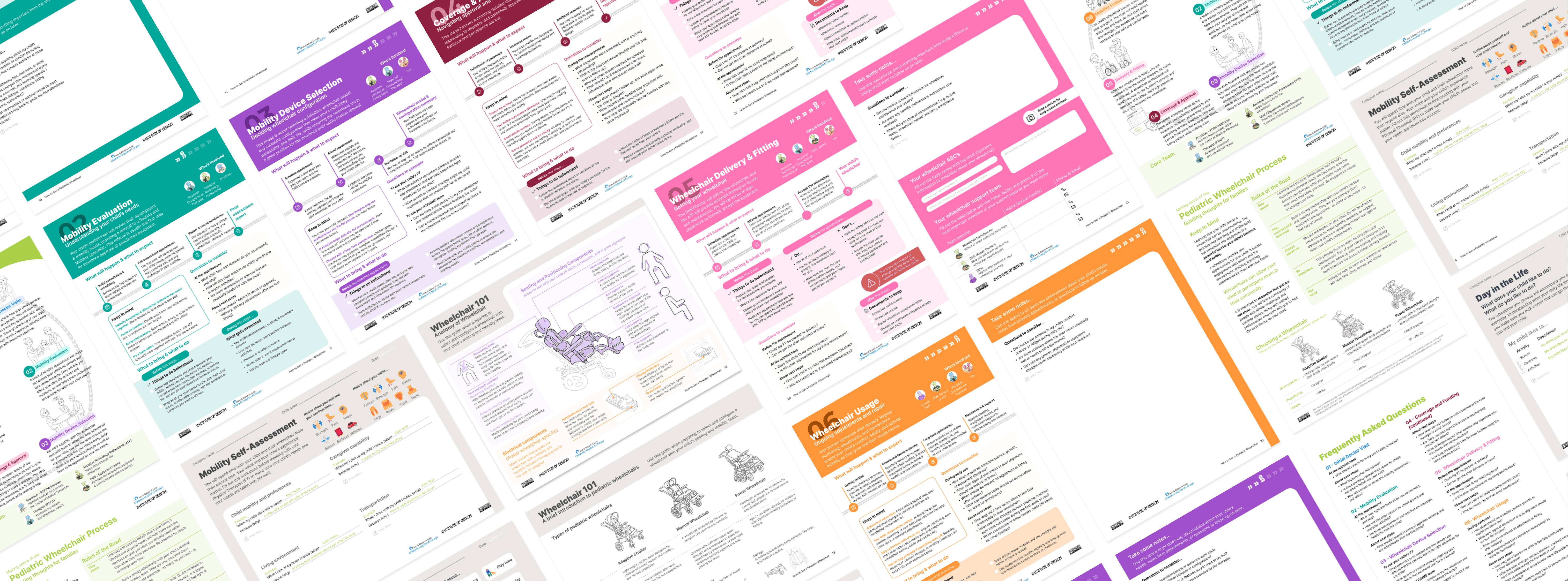
View the whole navigation guide
Navigation guide _ the overview handout
This document has every single page of the overview handout.
W 1
W 2
W 3
W 4
W 5
W 6
W 7
W 8
W 9
W 10
W 11
W 12
W 13
W 14
The design process
Contextual Research
Exploratory Research
Evaluative Research
Evaluative Research
Evaluative Research
Analysis & Synthesis
Prototype
Analysis &
Synthesis
Prototype
01
Contextual
Research
4 expert presentations (project onboarding)
Analogous research
Digital ethnography
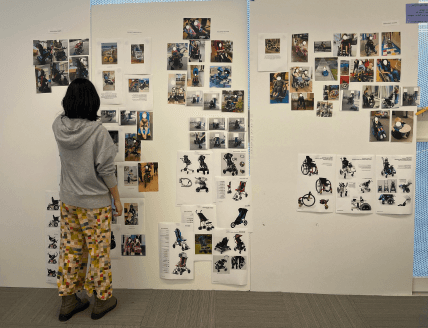
Photographic research
Online resource review
02
Primary Research (exploratory)
5 parent interviews
5 experts interviews
03
Analysis and Synthesis
Thematic analysis
Open coding
Structured debrief
Journey map
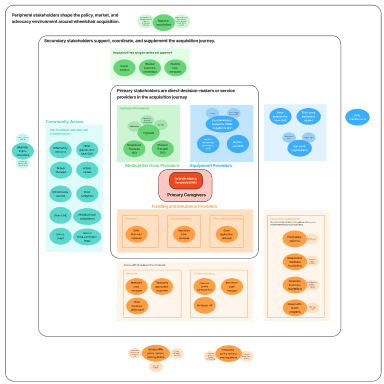
Stakeholder map
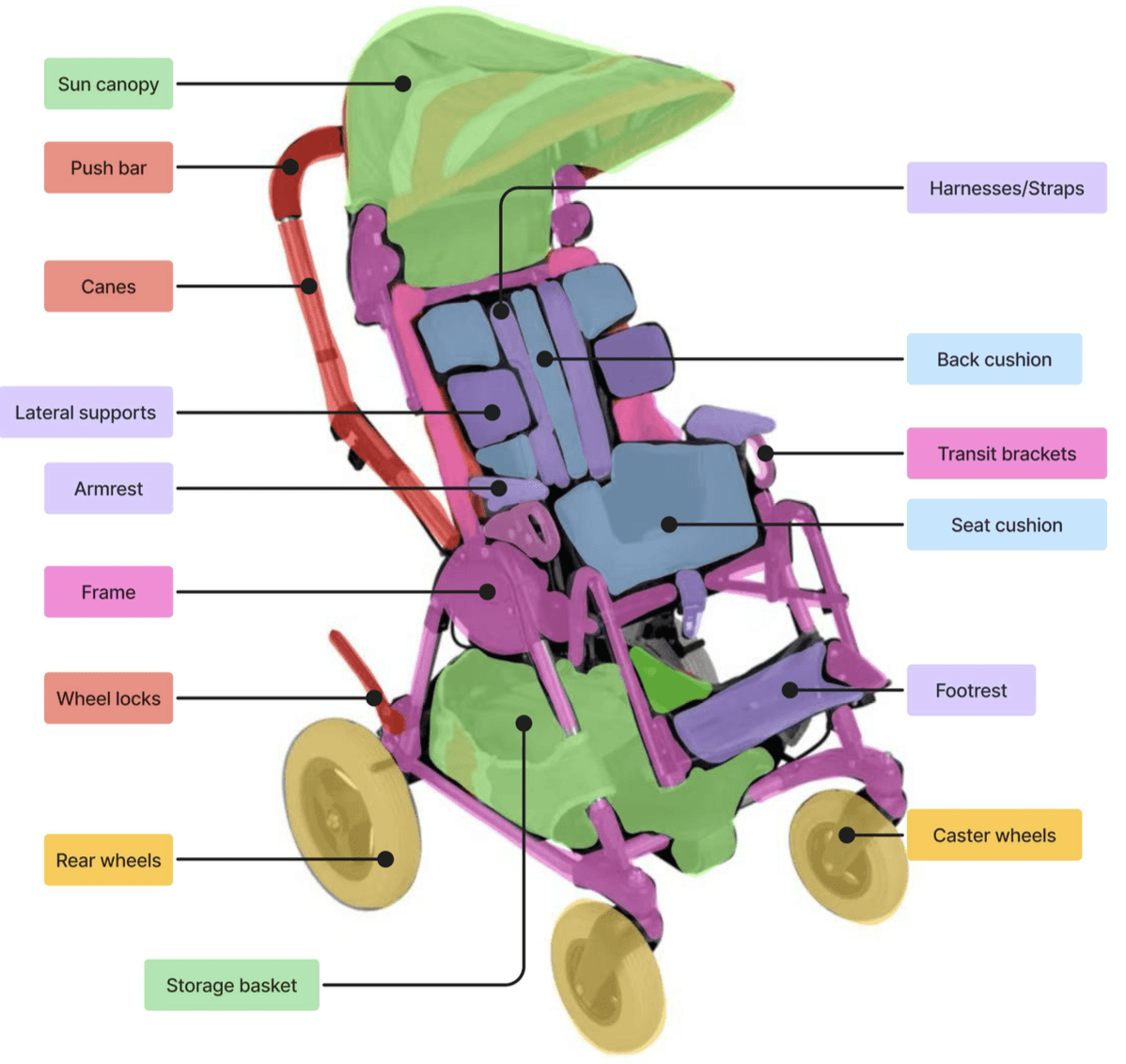
Wheelchair anatomy diagrams
04
Ideate and Prototype
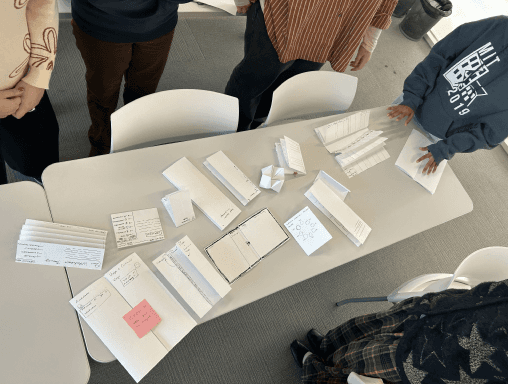
Rapid physical prototypes
4 digital prototypes
05
Primary Research (evaluative )
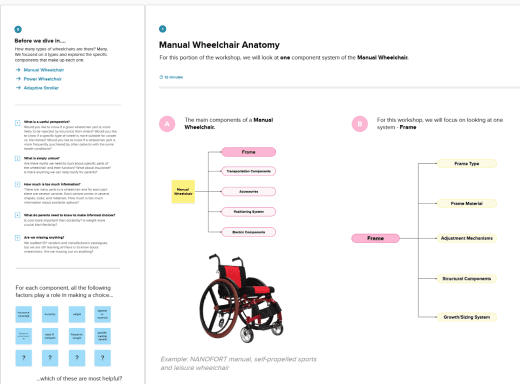
Asynchronous stakeholder feedback
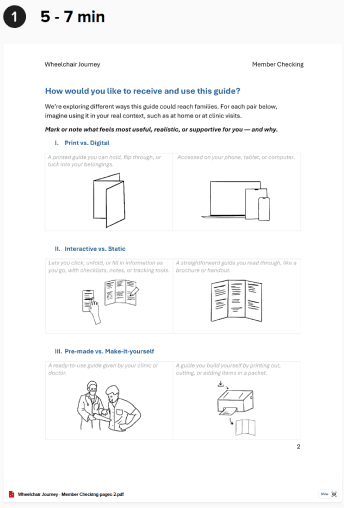
2 stakeholder workshops
Comparative testing
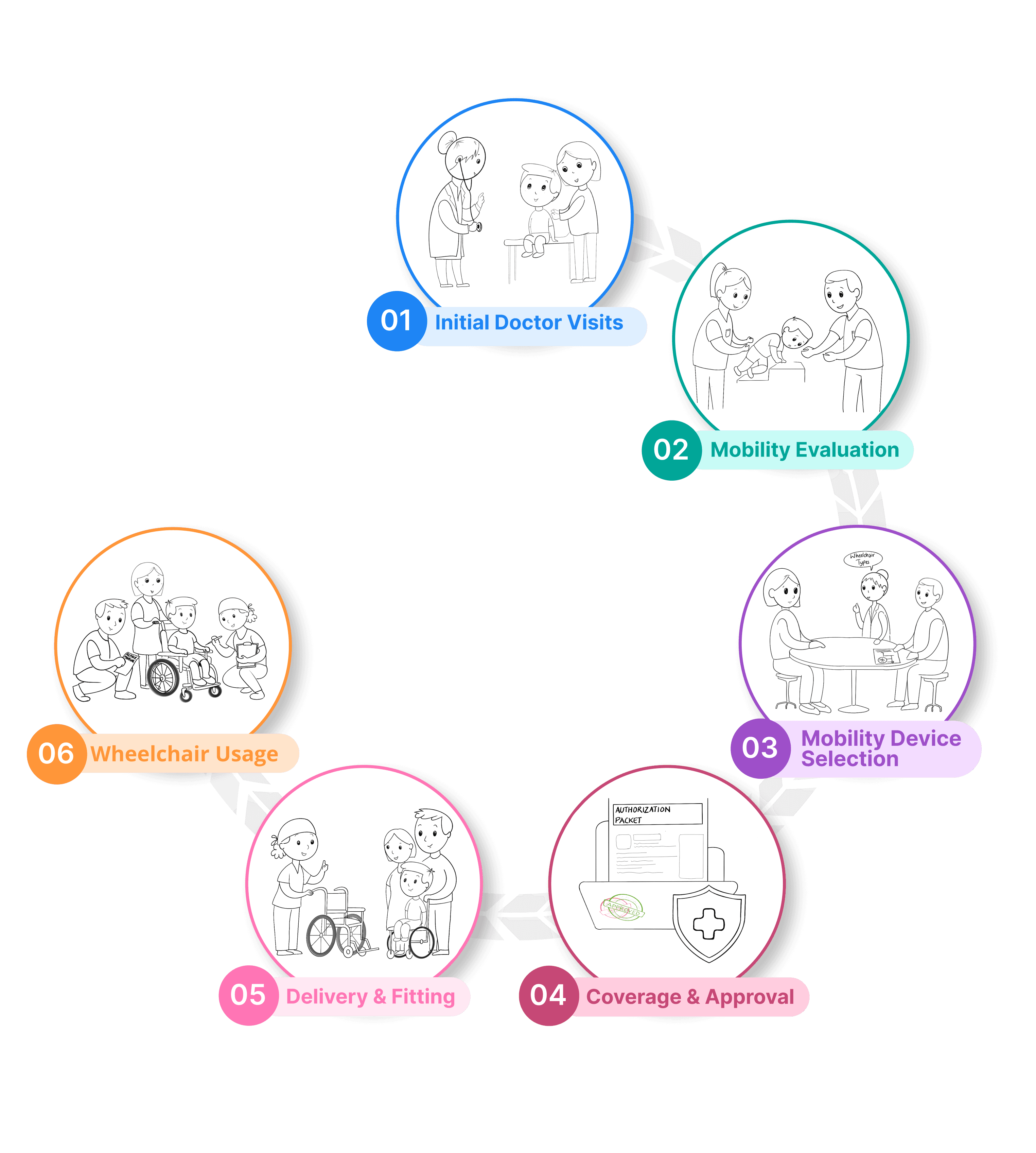
Getting a referral
Understanding child’s needs
Deciding wheelchair configuration
Navigating approval and funding
Getting the pediatric wheelchair
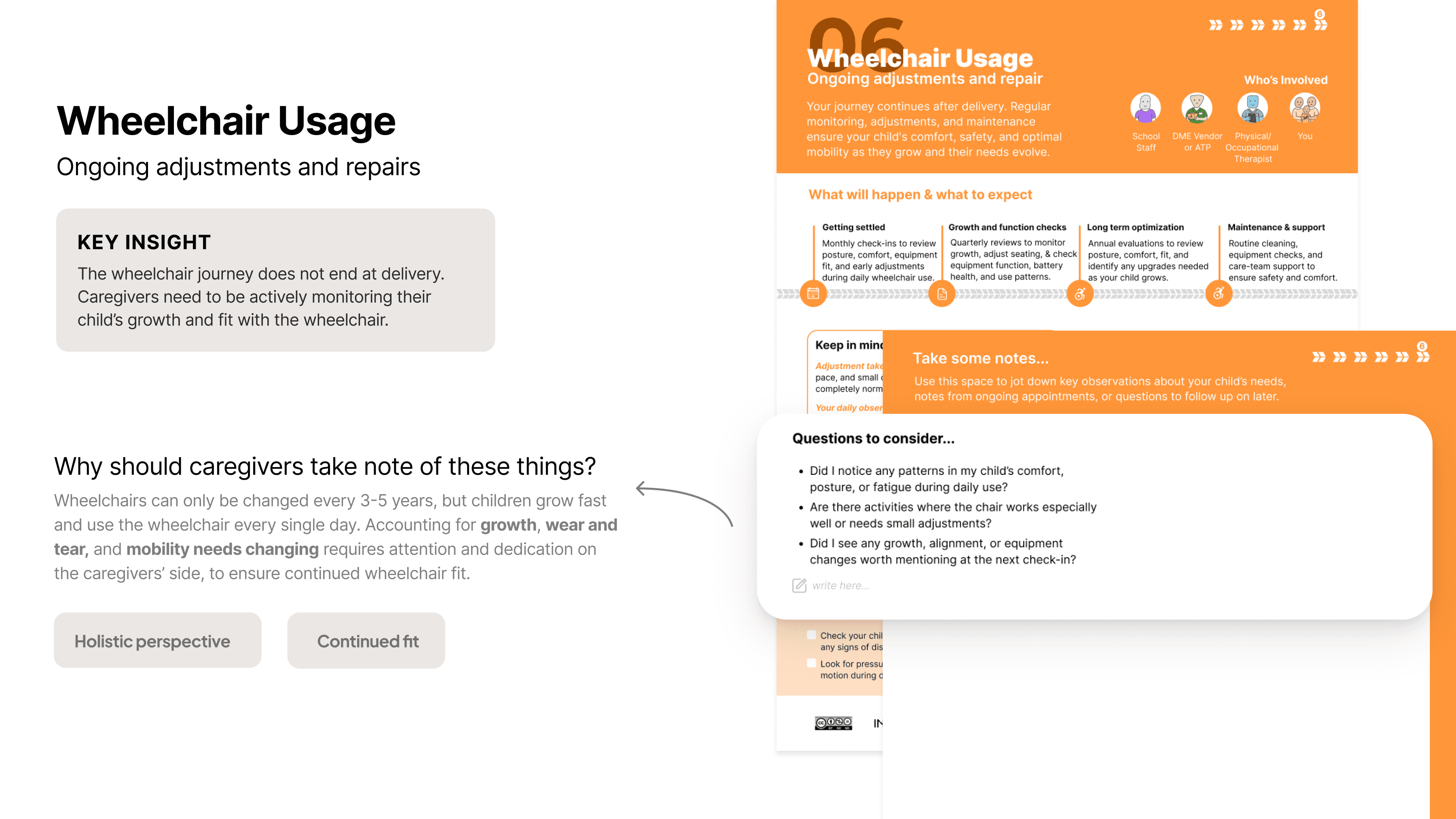
Ongoing adjustments and repairs
Deliverables
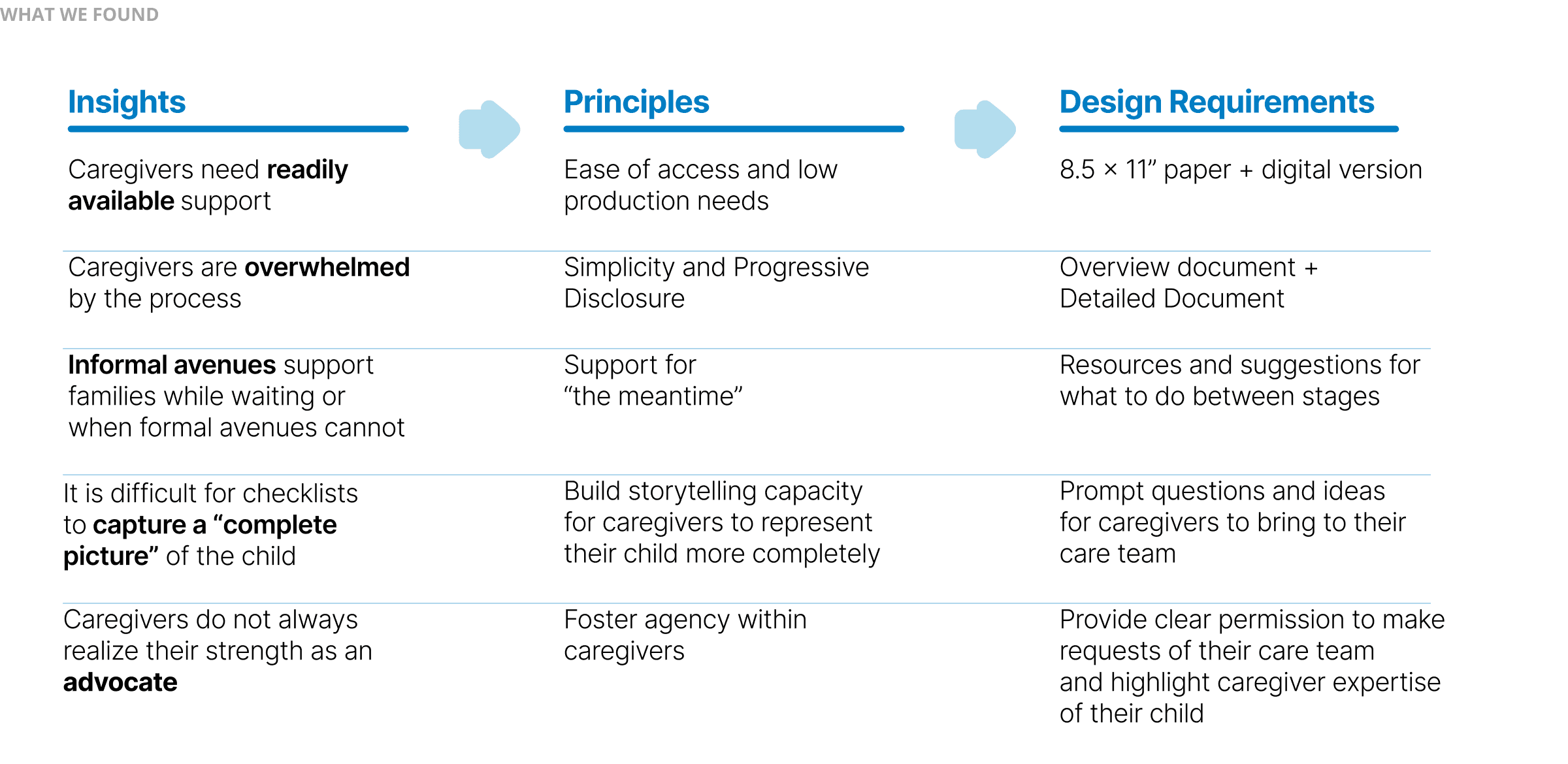
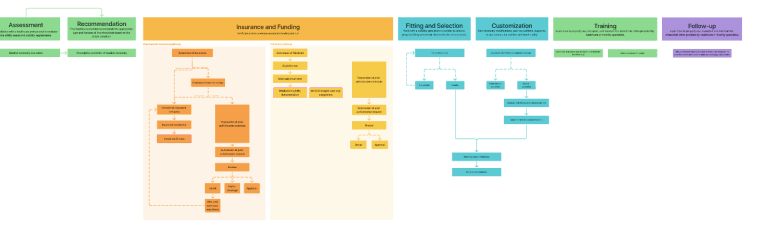
Reframed journey steps
Grounded in research findings, the team reframed the original wheelchair acquisition steps into
a journey that reflects families’ lived experiences.
Original steps defined
by Ann & Robert H. Lurie Children’s Hospital:
Assessment
Recommendation
Insurance and funding
Fitting and selection
Customization
Training
Follow-up
Navigation guide
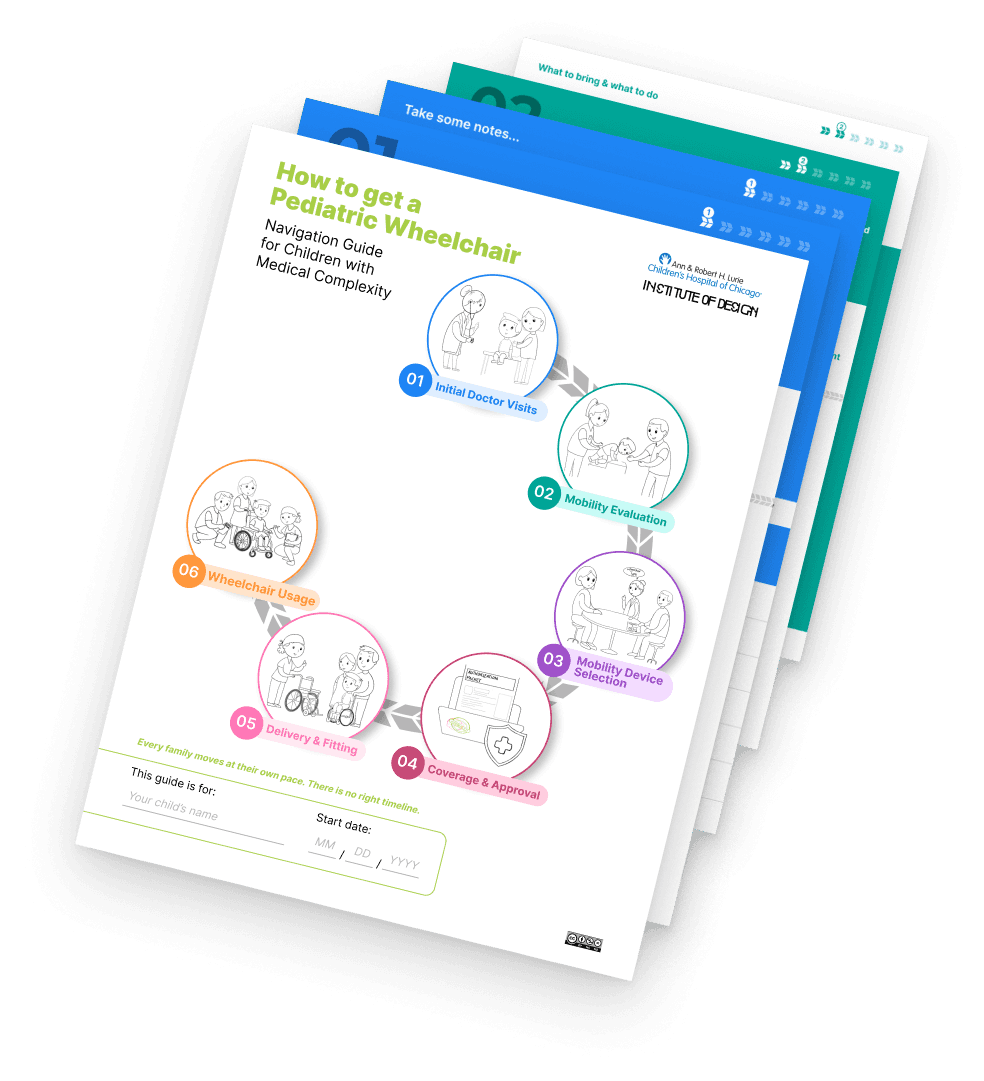
The guide includes both a high-level overview and a detailed, phase-by-phase interactive booklet that support caregivers as they complete the process.
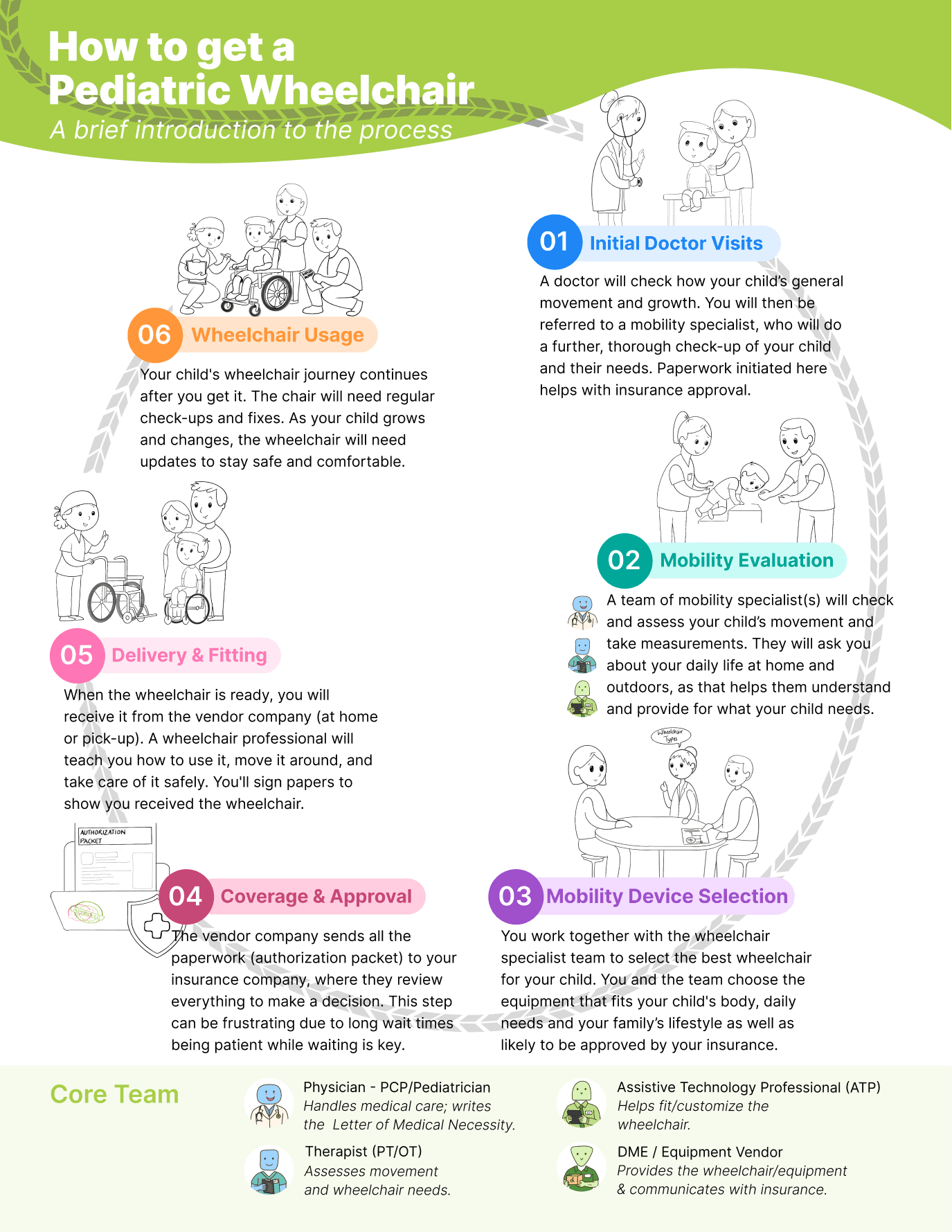
Rules of the Road
Mindsets to prepare caregivers for the challenges ahead.
Remind parents that they have power.
Types of Wheelchairs
Summary of the basic differences among the three main types.
Core team
The professionals involved throughout
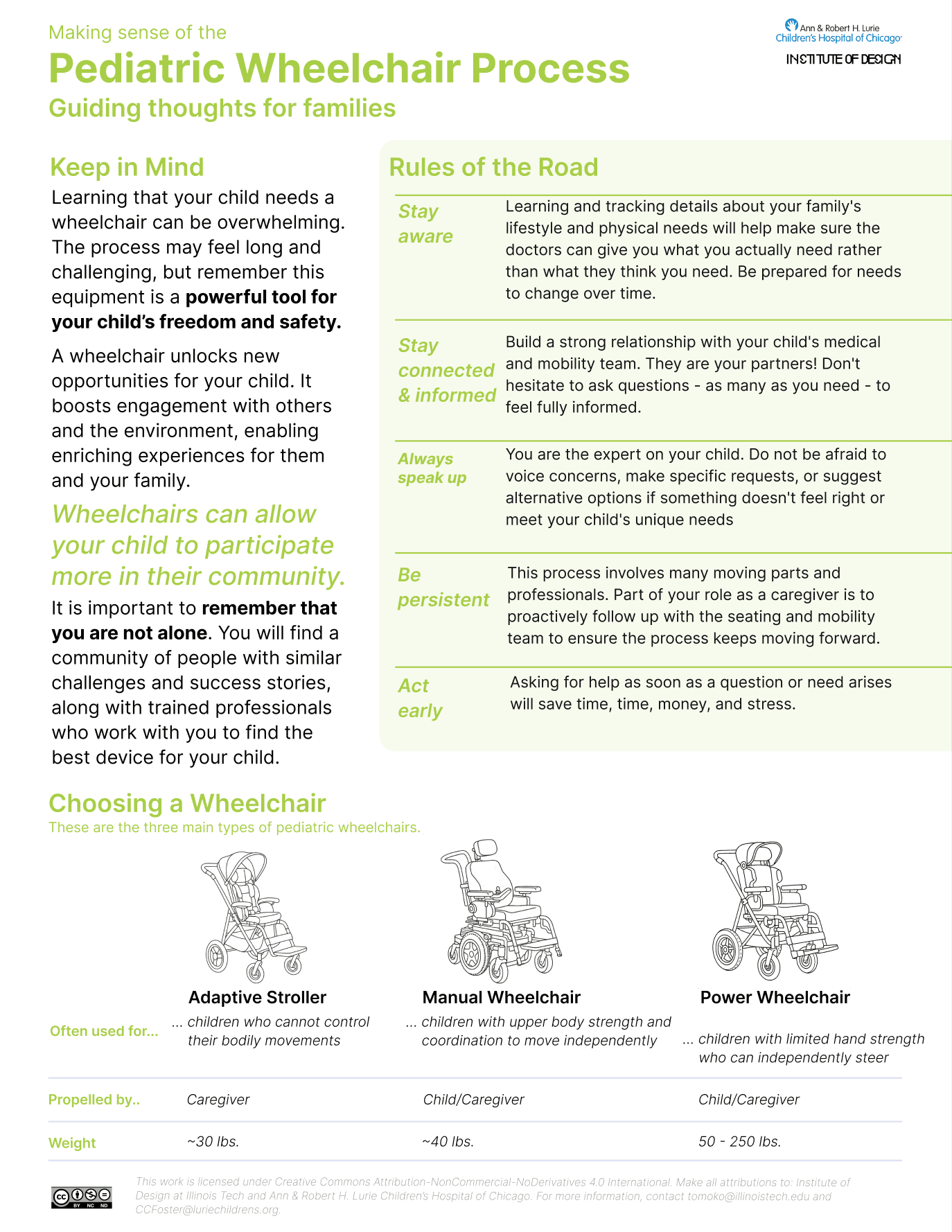
6 Stages
Stage-by-stage
wheelchair acquisition journey
The Overview Handout
A brief introduction to the process, who is involved, and ideas for approaching the road ahead.
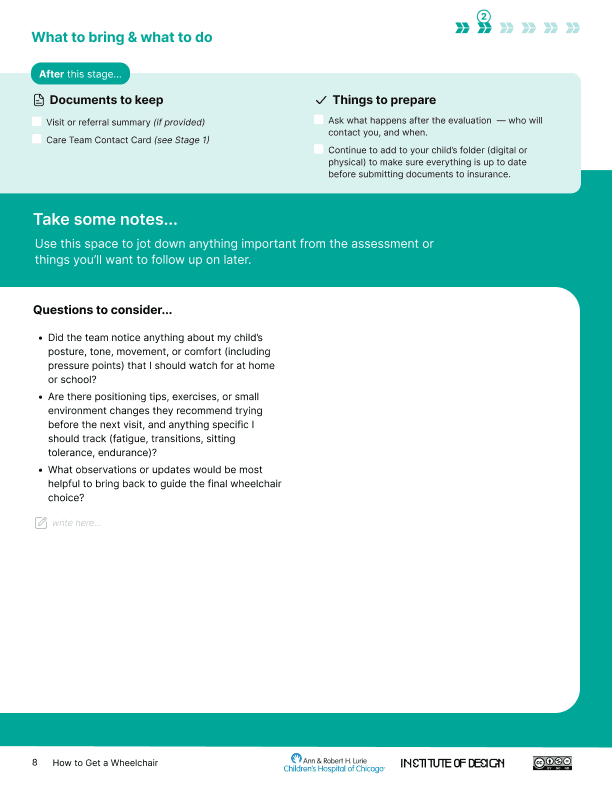
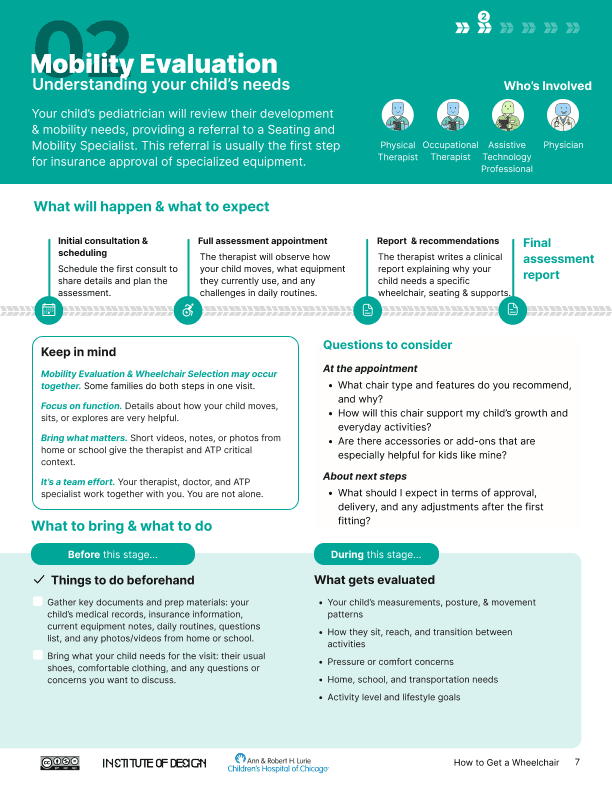
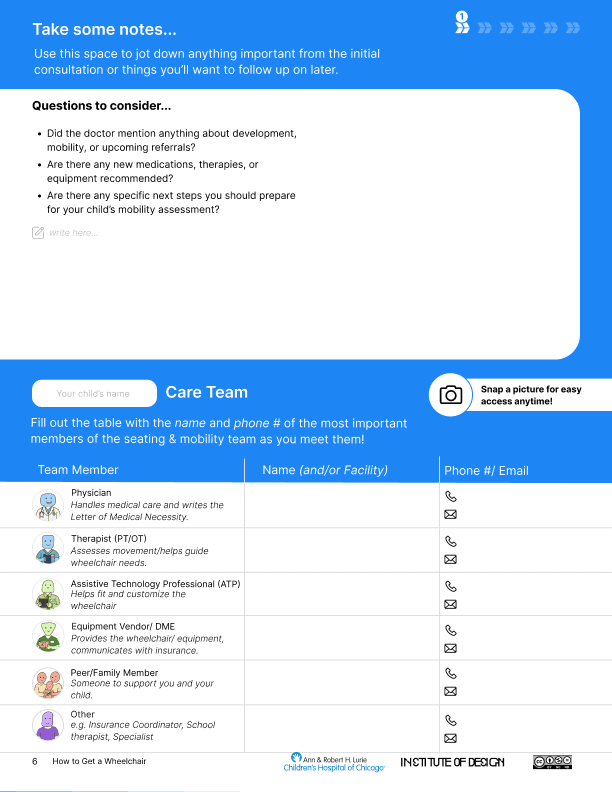
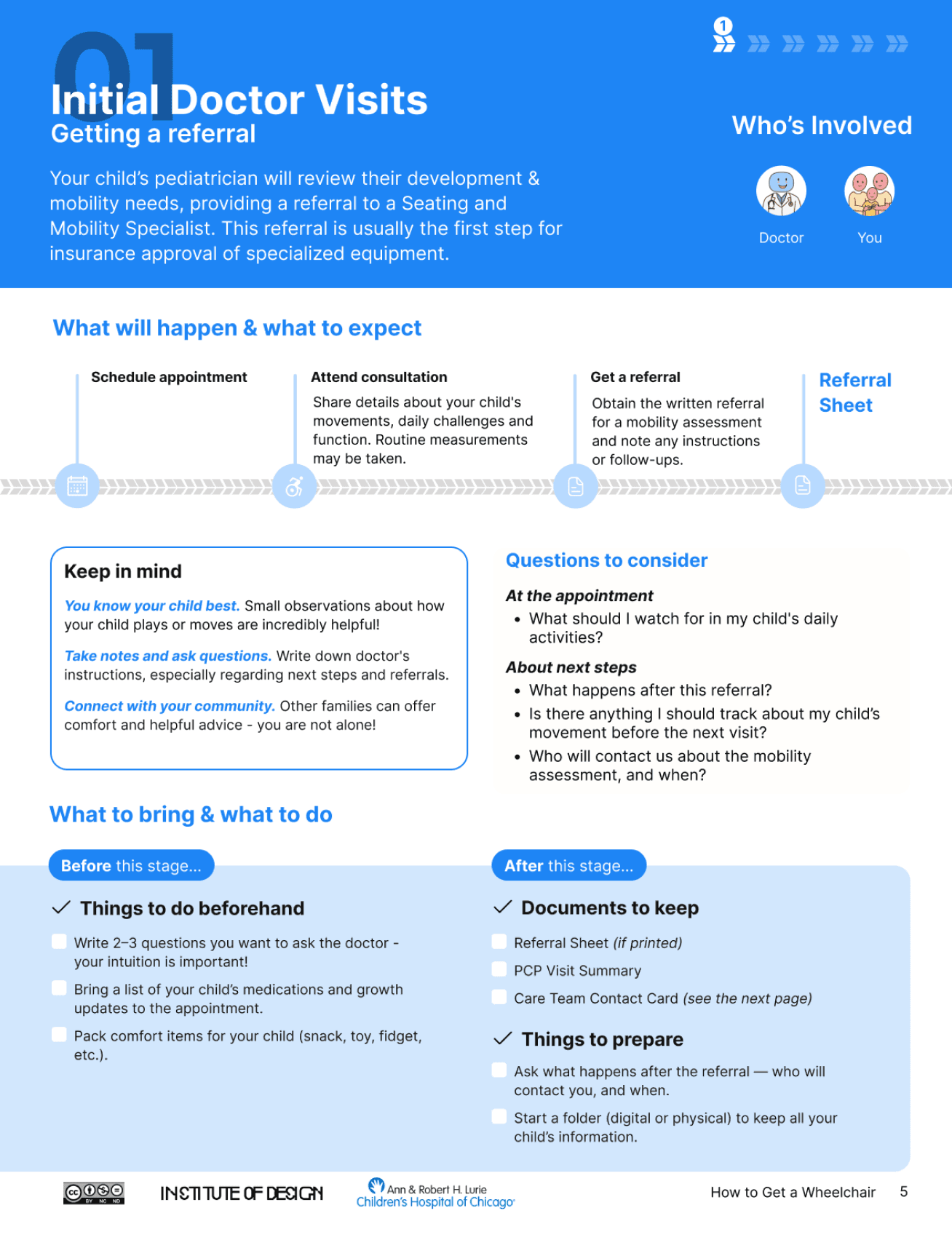
What to expect
What to do and keep track of
Guidance
stage description and timeline
what to do and keep track of before and after this stage
Guidance on what to ask and who to rely on.
6 Stages
Stage-by-stage
wheelchair acquisition journey
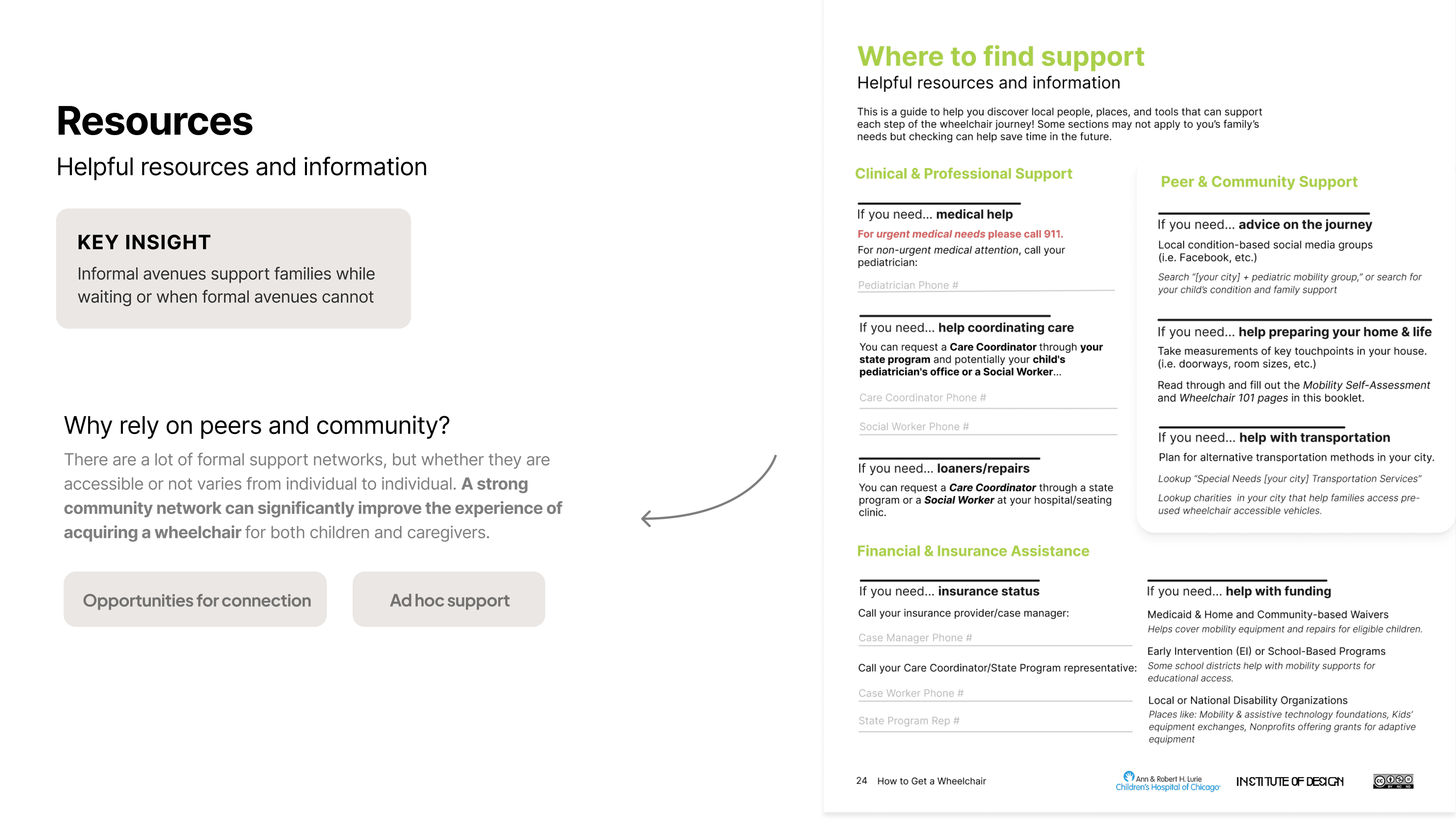
Resources
List of clinical and community resources
Worksheets
2 worksheets sheets for caregivers to learn more
The Detailed Guide
An in-depth, interactive guide with detailed prompts, questions to consider, and reminders for critical steps.
detailed guide walkthrough
Detailed navigation
guide walkthrough
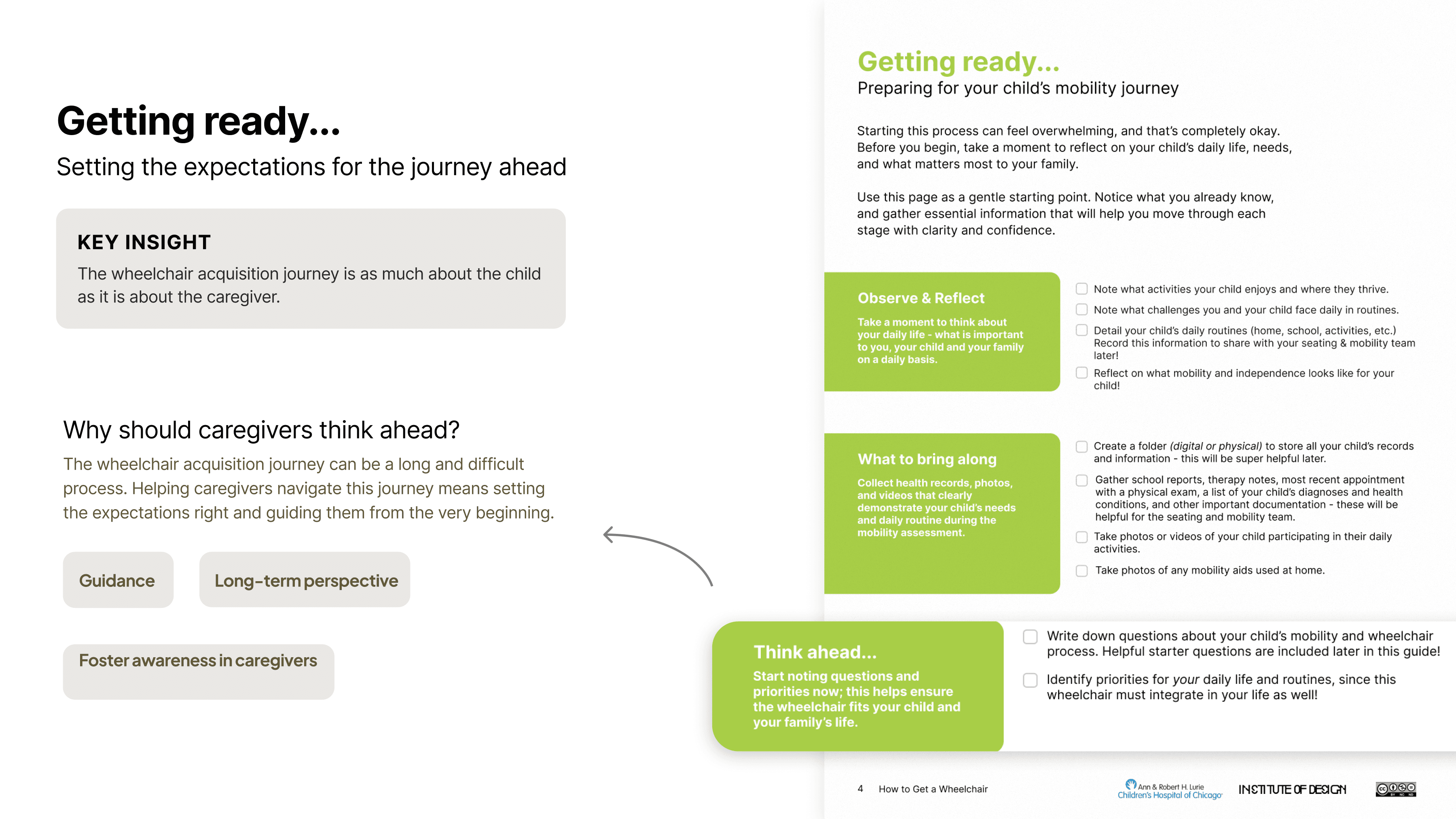
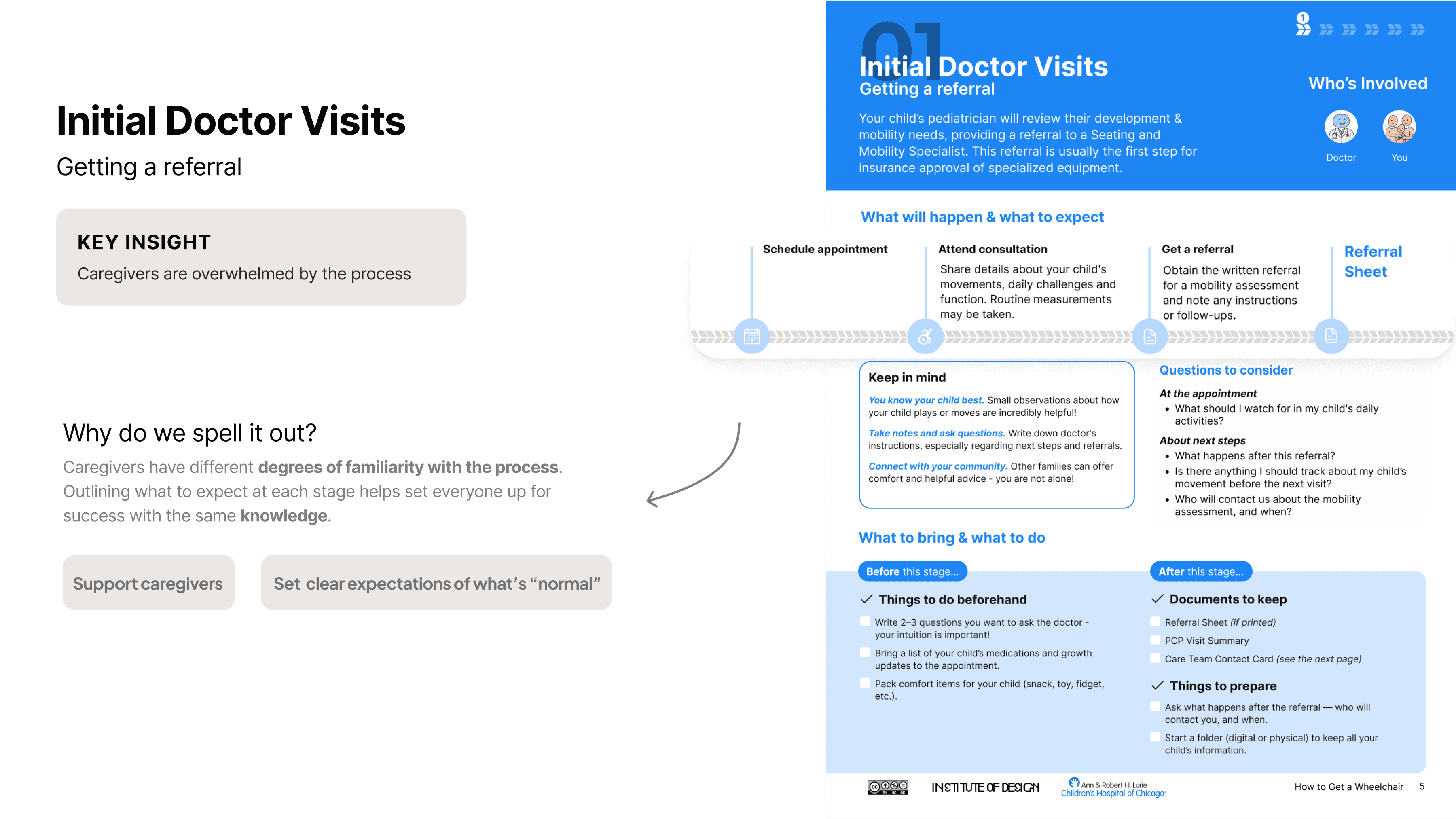
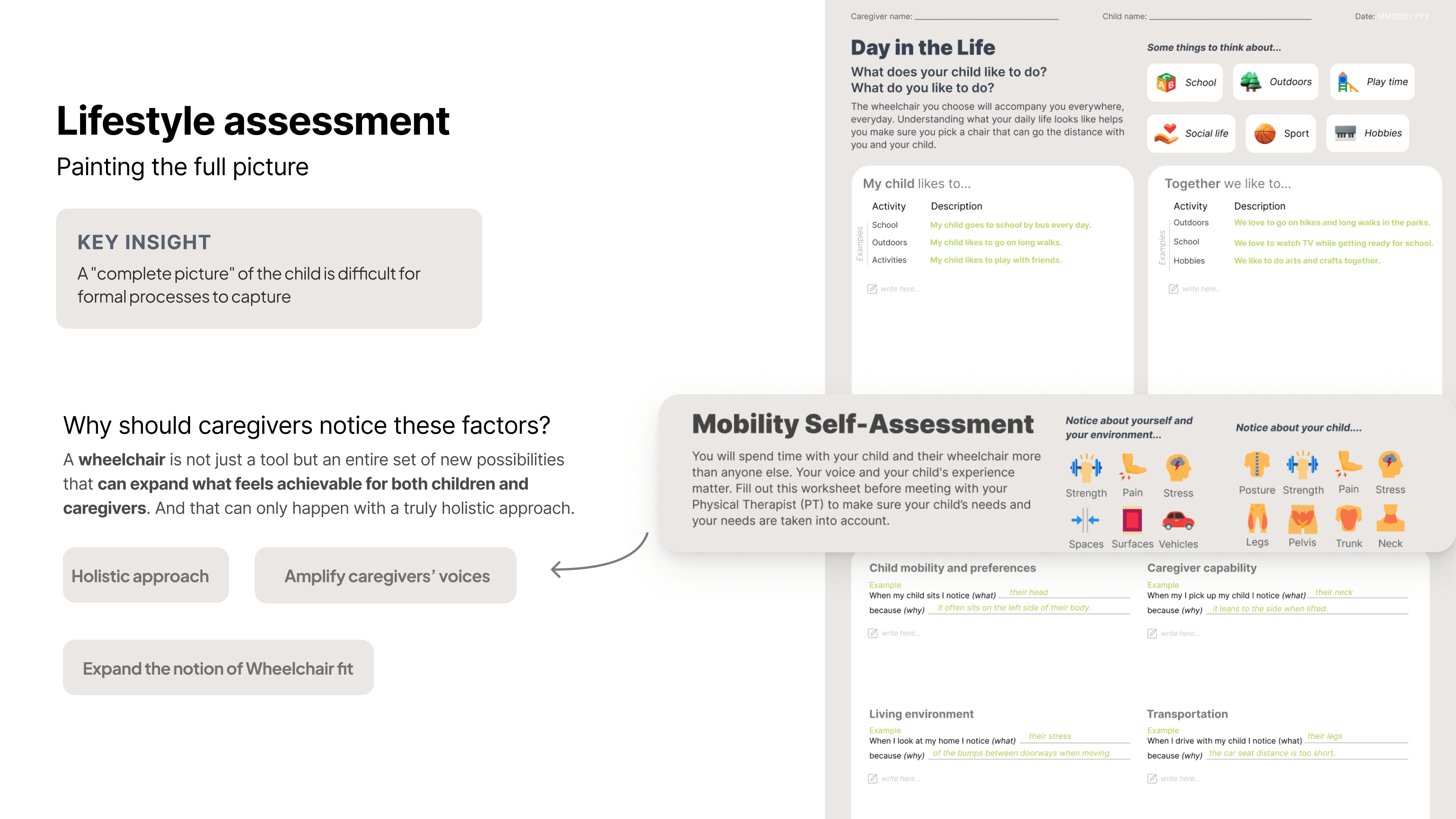
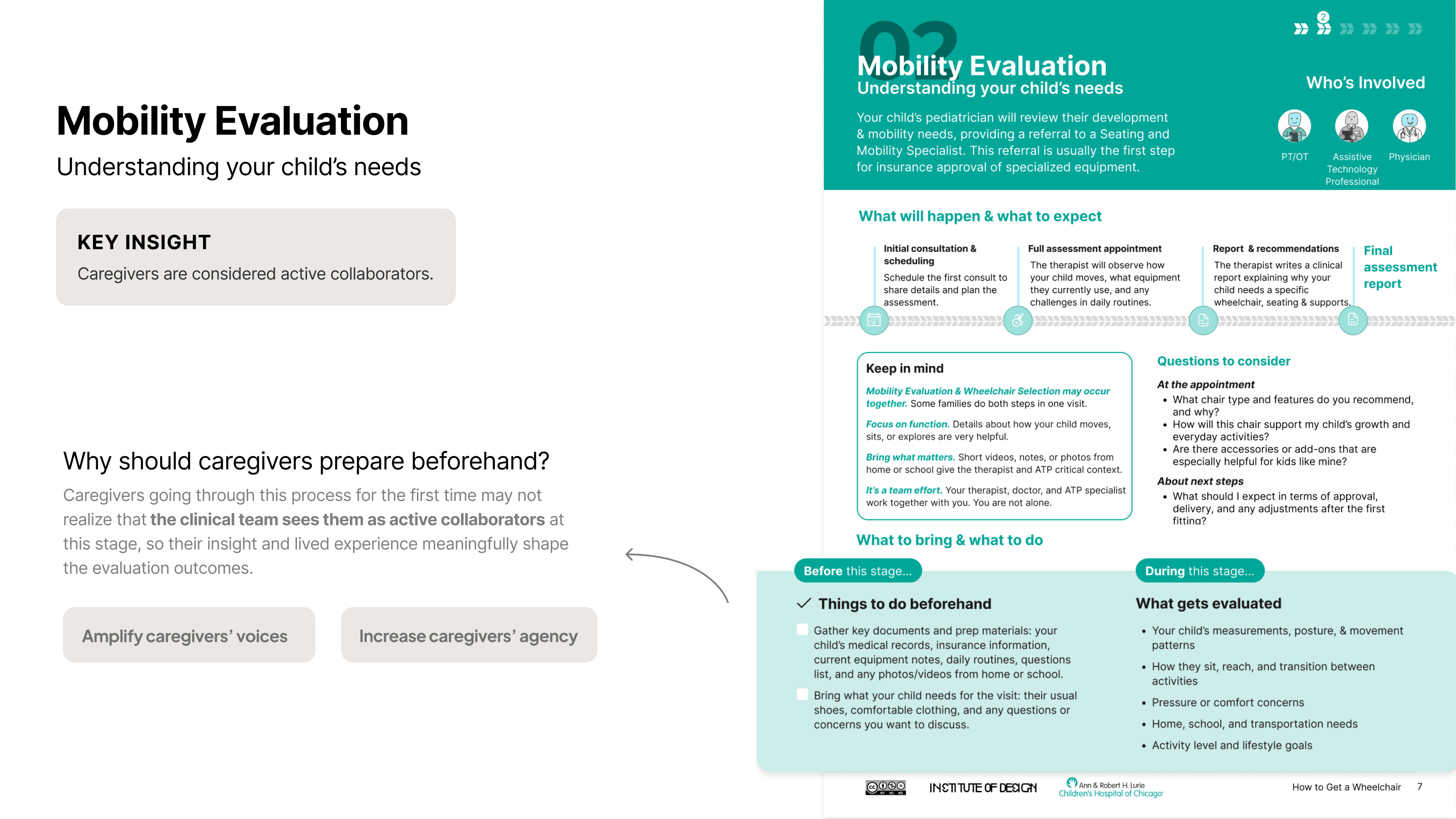
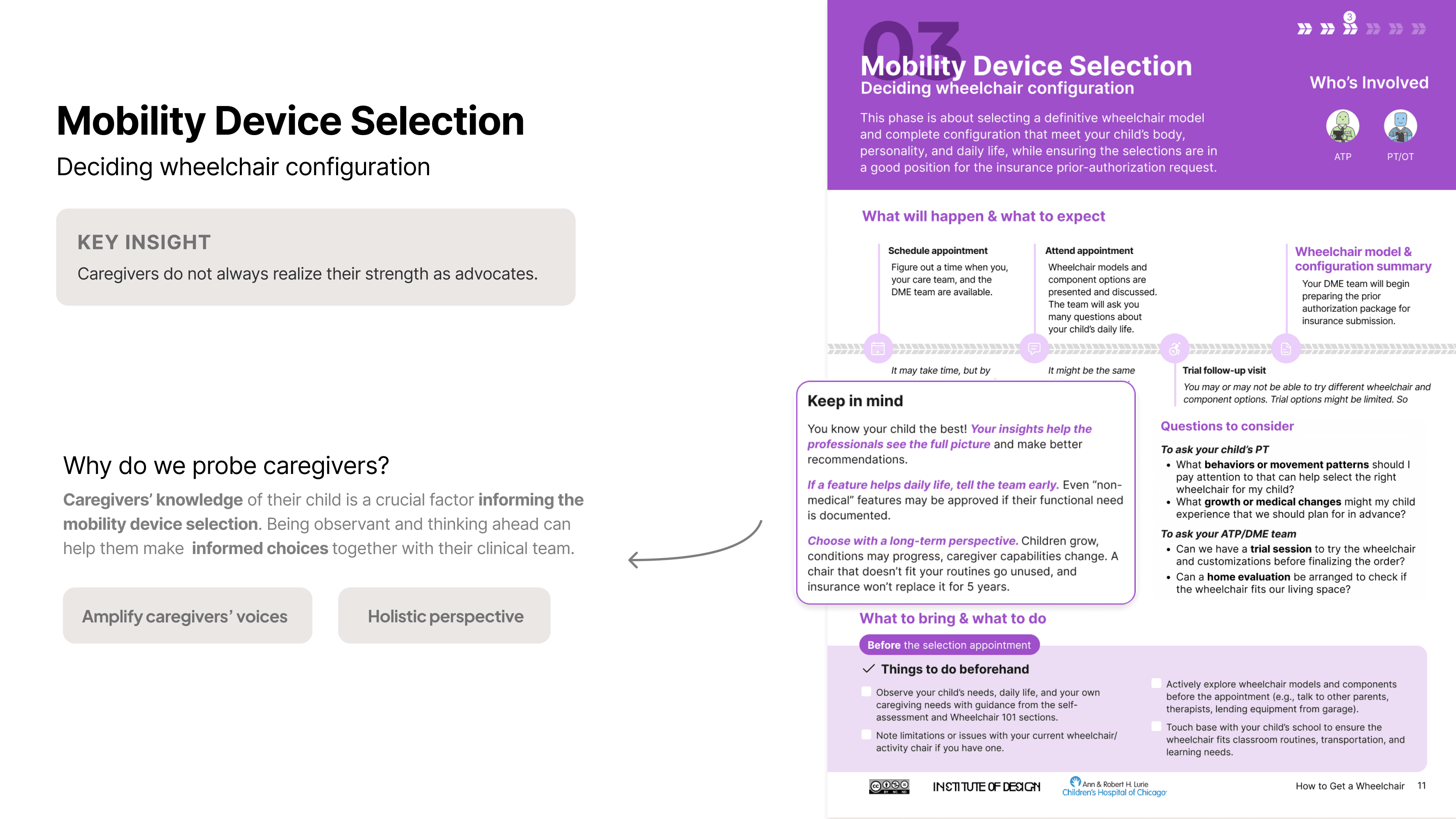
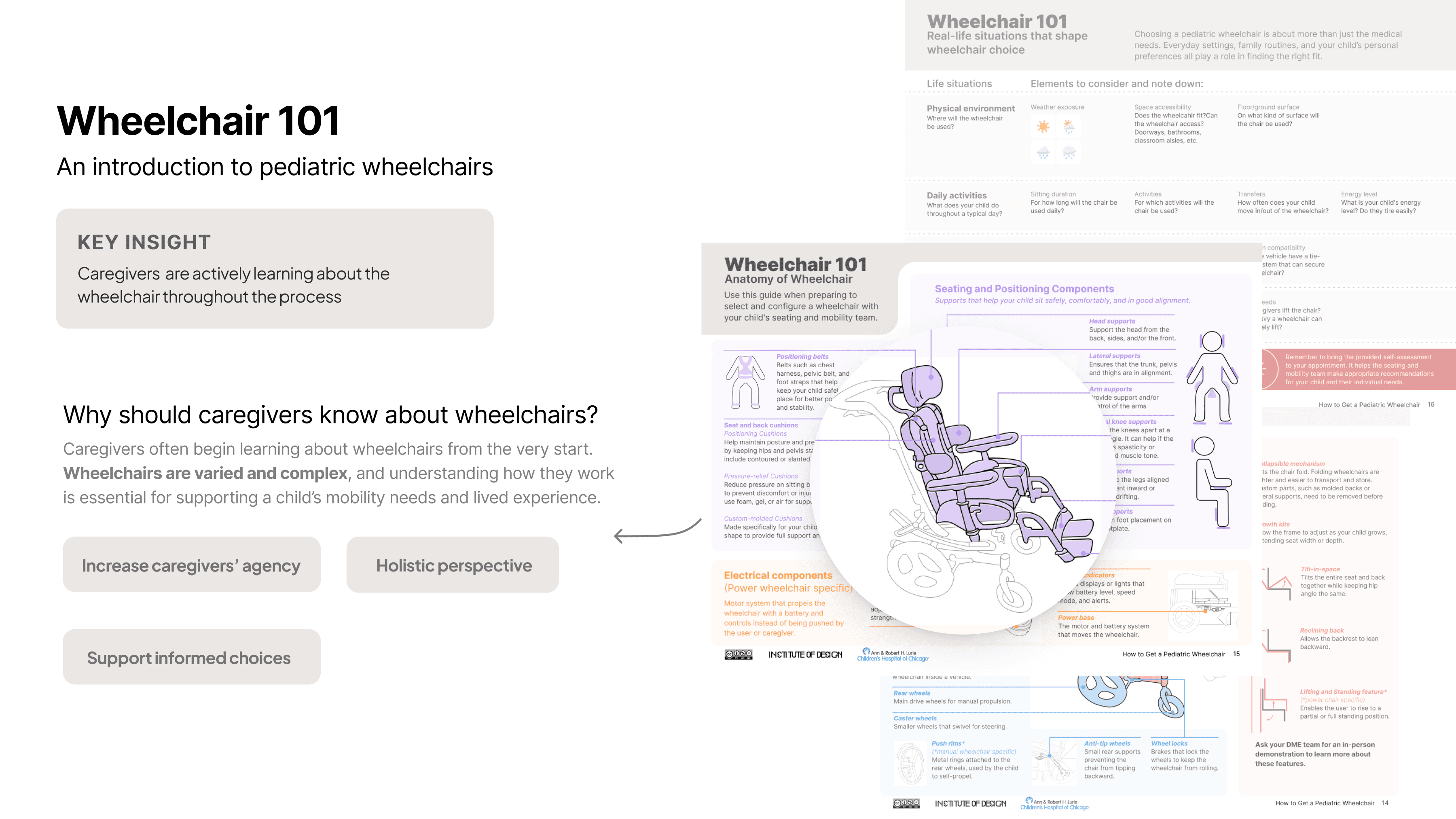
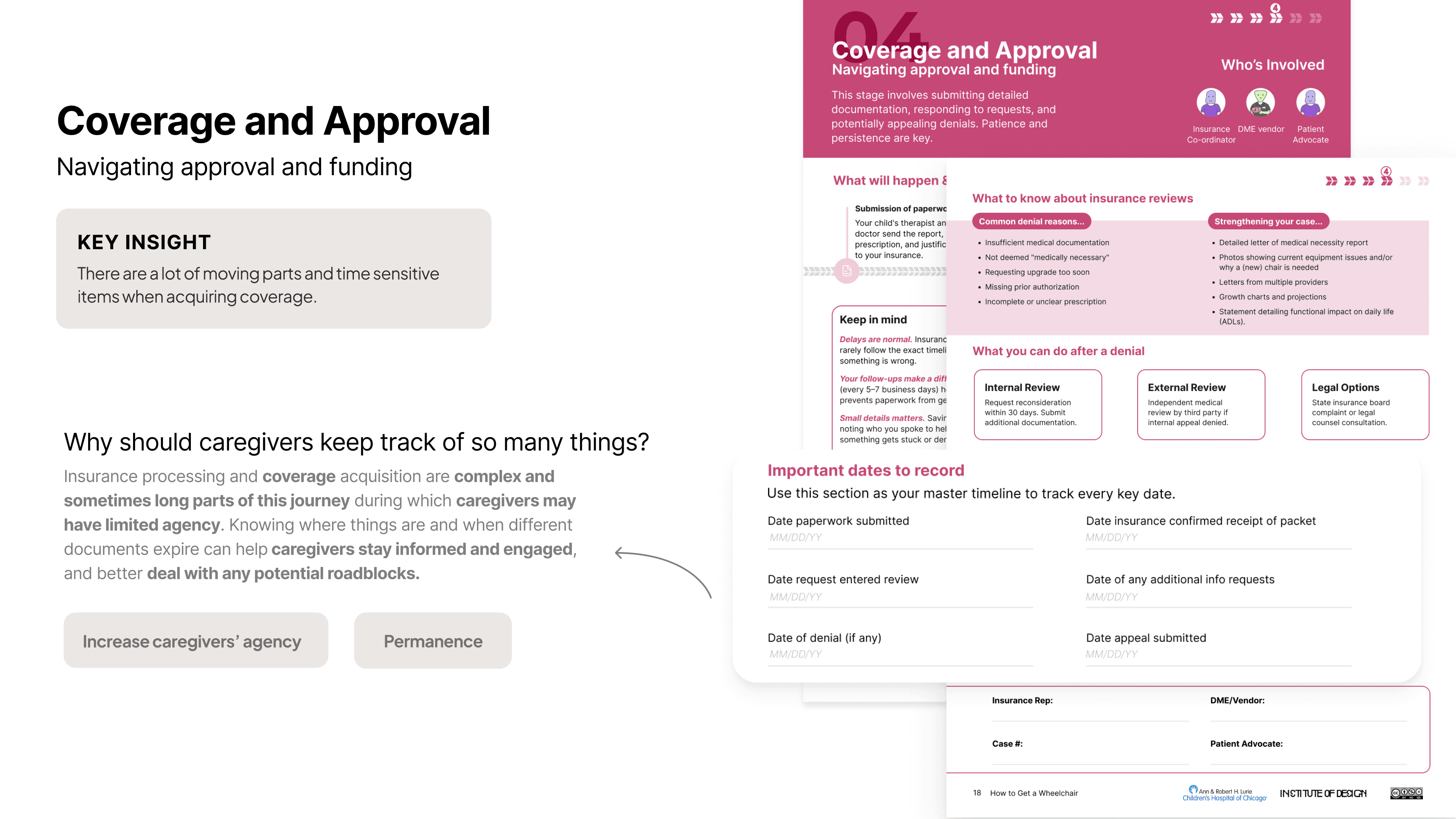
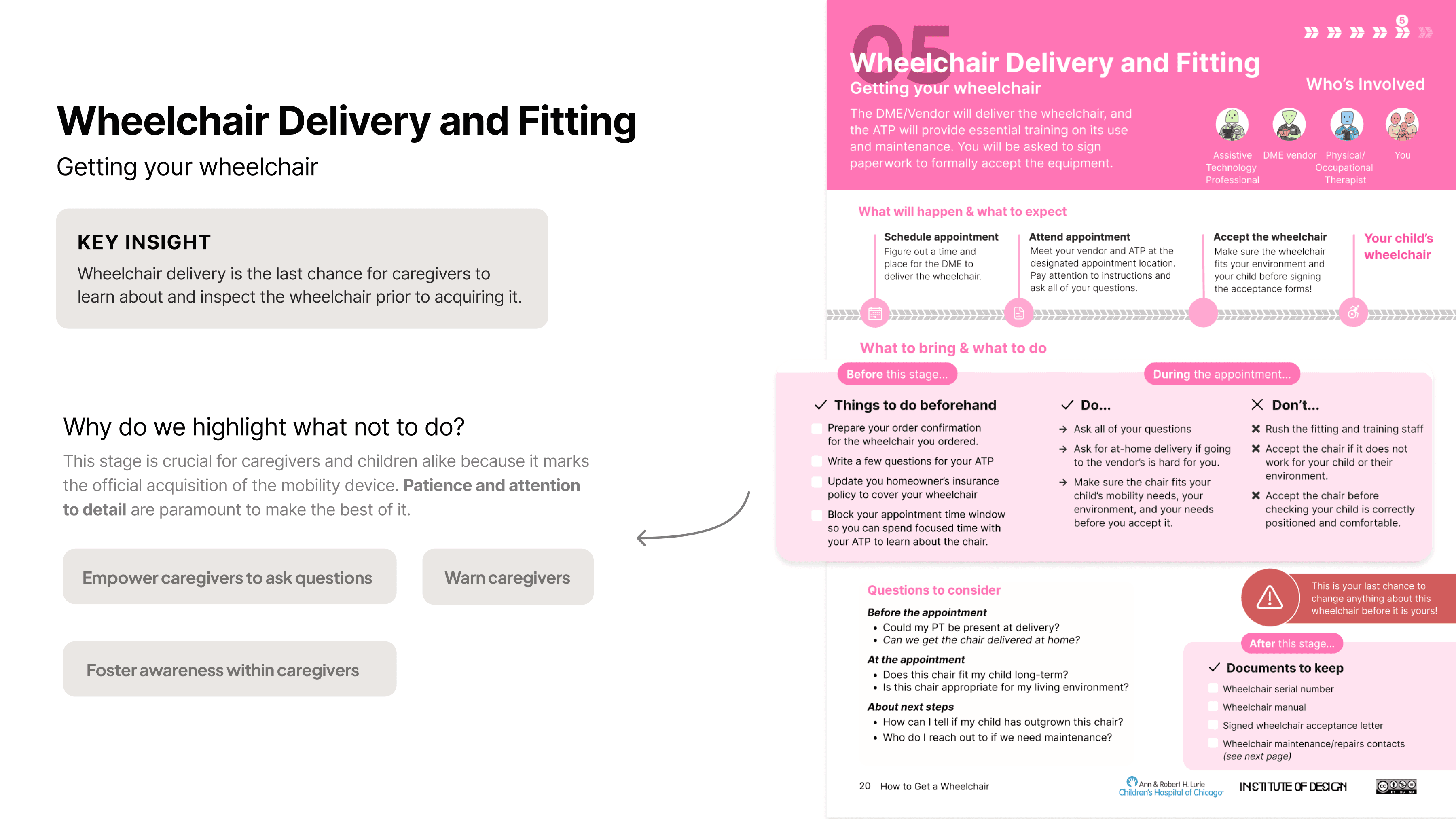
The following section will walkthrough you the main sections on the detailed navigation guide and their driving research insights.
Next step
Prototype Testing
Accuracy
Reviews by medical professionals.
Is it reflective of the system
and process?
Are their missing pieces?
Is this information appropriate?
Effectiveness
Usability testing with real families.
Do caregivers understand the information as presented?
Are they more confident or prepared?
Implementation
Contextual applications and dissemination.
Who should give caregivers these documents?
Is digital or physical more useful?
Is the information perceived as trustworthy?
Process highlights
(in progress)
How we adapted
research methods when participant recruitment slowed
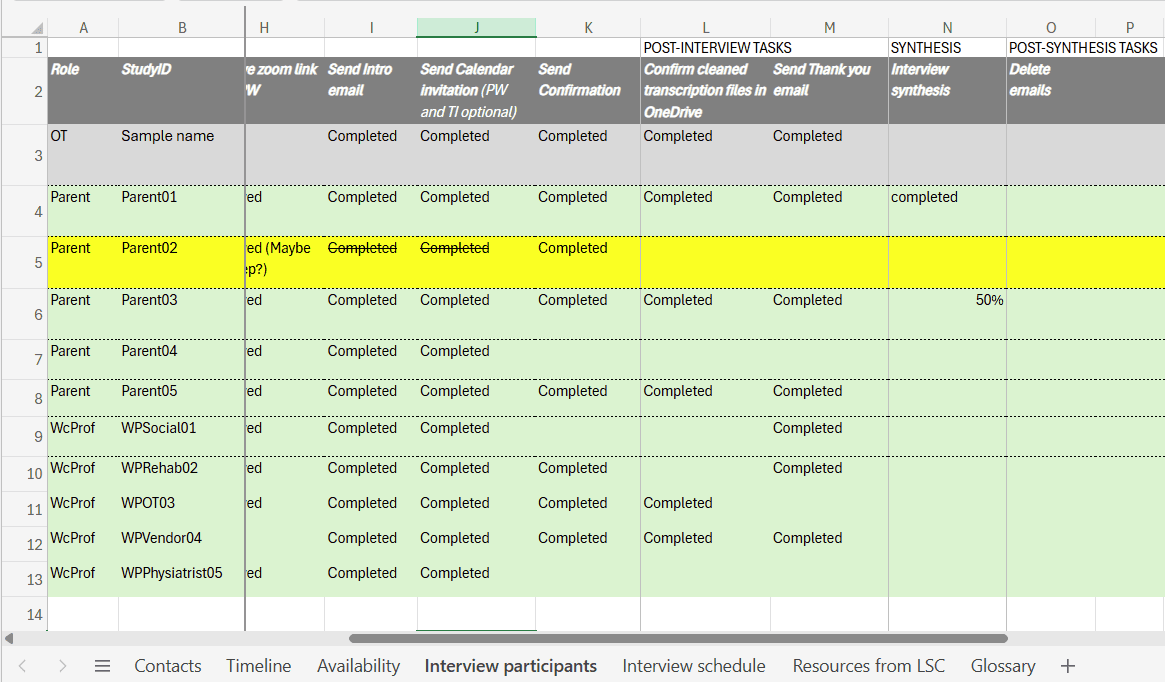
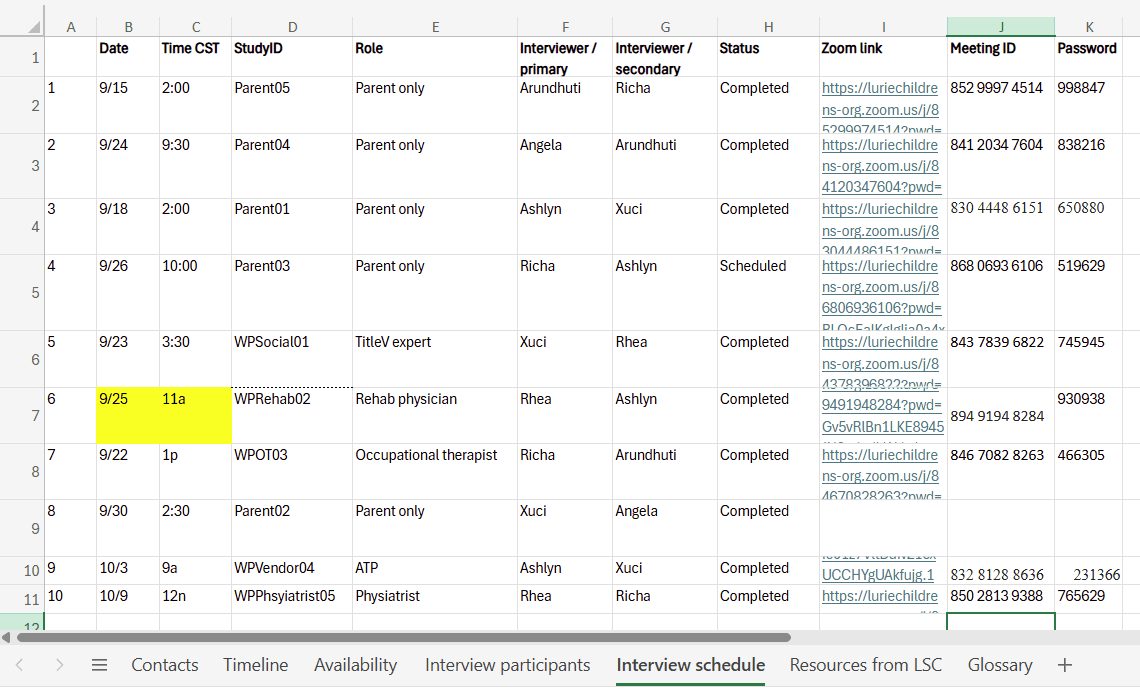
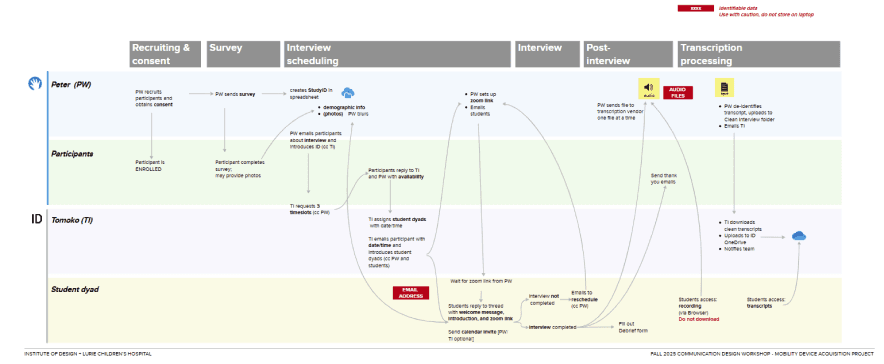
How we coordinated
a multi-team research process
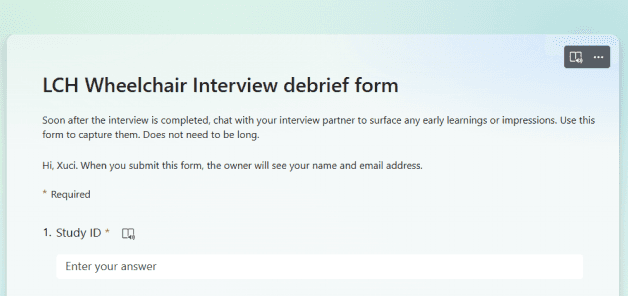
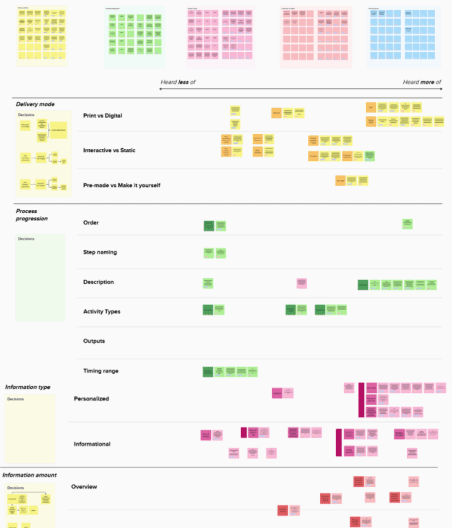
How we accelerated
analysis and synthesis
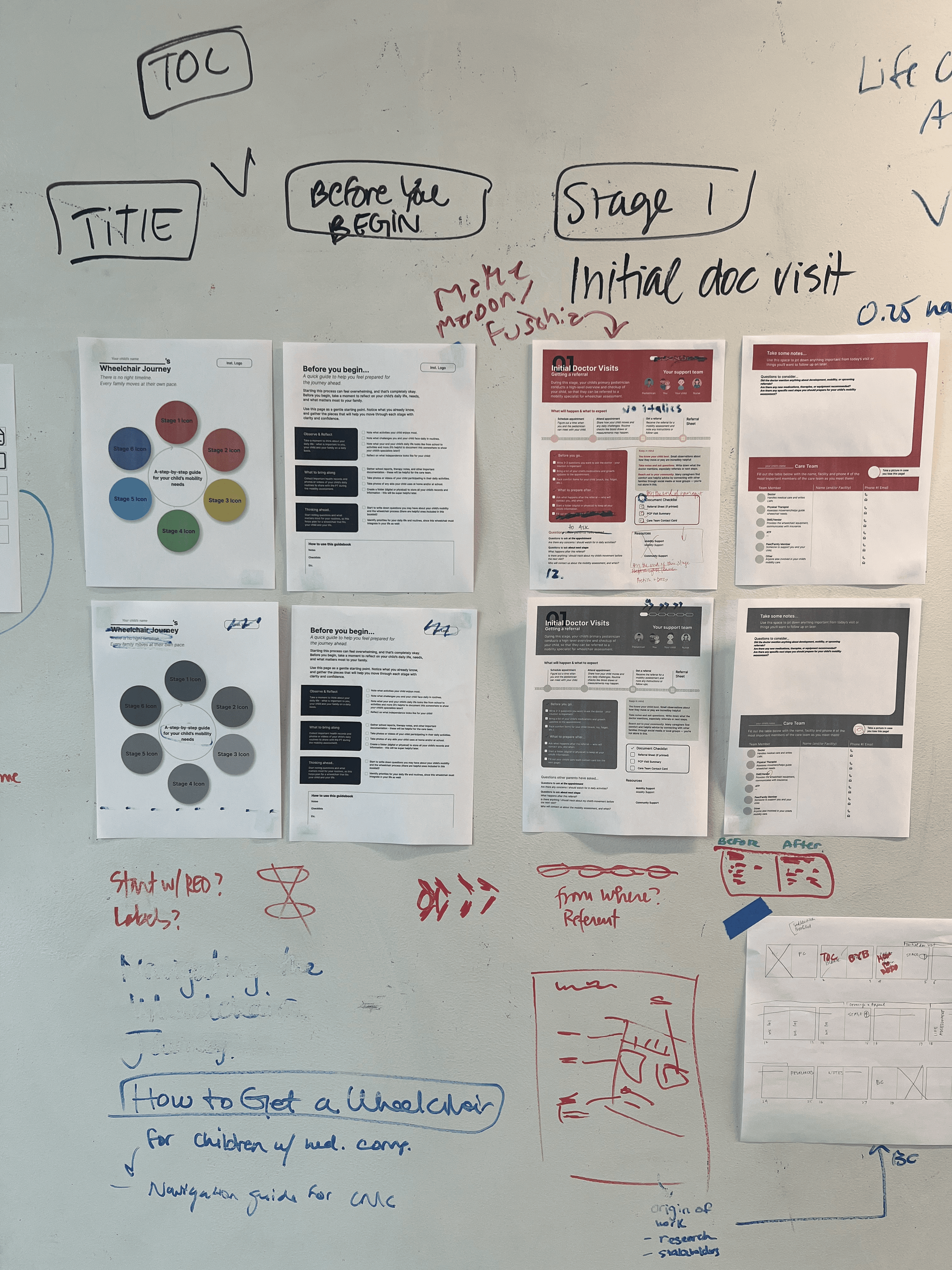
How we maximized
individual contributions while maintaining design coherence
How we co-created
with stakeholders