
Children's Participation in School Design
Examining how children's participation contributes to architectural design and child development.
Project context
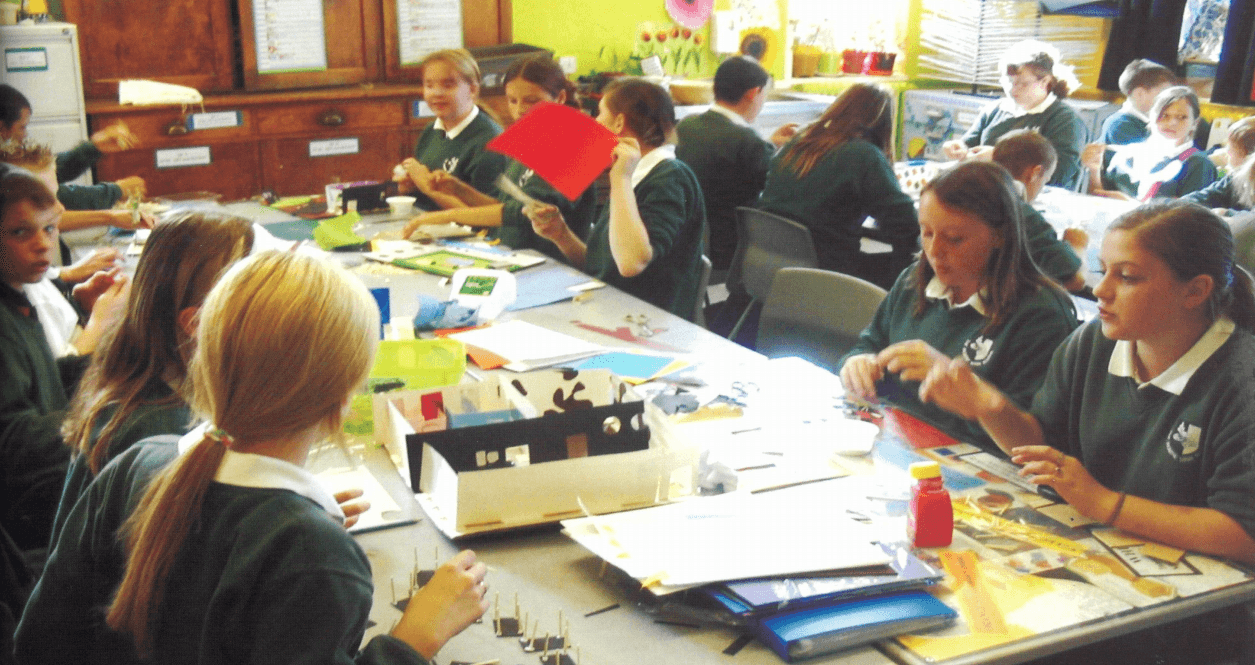
This was my undergraduate dissertation, written in 2022 at the University of Sheffield. I examined two Building Schools for the Future (BSF) projects in the UK: Southfield Grange Secondary School in Bradford, and the Re-Designing Learning programme in Barnsley. Through in-person interviews with two lead architects directly involved in the projects, I analyzed the participation processes through three frameworks: Arnstein's Ladder of Citizen Participation, Hart's adaptation for children, and Piaget's stages of cognitive development.
Key Research Questions
- How do clients and funding bodies influence the level of user participation?
- How can children of different cognitive stages meaningfully participate in design process?
- How does participation shape both the final design and the participants themselves?
My Role
Design Researcher
The Team
Stephen Martlew - Academic Advisor
Leo Care - Academic Advisor
industry
Participatory Design
Architectural Design
timeline
Jan - May 2025 (14 weeks, part-time)
What I found
01
Calling a project 'participatory' is easy.
Measuring the level of participation is more useful.
The term "participatory design" has many definitions and is often claimed loosely. Many projects describe themselves as participatory, but the actual degree of involvement varies. Arnstein's Ladder of Citizen Participation and Roger Hart’s Ladder of Children’s Participation offer a more useful framework: rather than asking whether a project is participatory or not, we measure where it sits, from manipulation and tokenism at the bottom to genuine shared decision-making at the top.
02
Participatory design lives in the negotiation between design teams and funding bodies.
Clients and funding bodies might resist extensive participation due to concerns about cost and timeline. The depth of participation in any project depends on how design teams navigate these concerns, whether by demonstrating business value, or developing methods that work within constraints.
03
Participatory and co-design are about empowering users to shape their living environment.
Participatory design gives users a voice without requiring them to speak the designer's professional language. It is not just a method, it is a question of who gets the power to shape the spaces and systems they live in.
04
Children can participate meaningfully
at every cognitive stage.
Children at each age have different cognitive capacities. By matching design tasks to these capacities, children at every stage can contribute meaningfully. Without their participation, adult-led decisions are often based on assumptions that may be insensitive or mistaken, failing to reflect children's actual preferences.
Following Piaget's stages and Leo Care's architectural practice:
2 to 7 years (Preoperational): Investigation through play, sensory connection, drawings and models, ability to express preferences and generate design ideas.
7 to 12 years (Concrete operational): Contextualizing architecture, understanding the role of the architect, recognizing environmental issues and their importance.
12 to 15 years (Formal operational, early): Thinking about others' needs and requirements, understanding the complexity of a design brief.
15 to 18 years (Formal operational, late): Informed design, integration of subjects, understanding the relationship between activities and space, linking concept to realization.
05
Participation benefits both the design and the participants.
For the design: a closer fit to actual use, and higher user satisfaction that often leads to more careful use of the space.
For the participants: empowerment, improved mental health, social and pedagogical development, and a sense of ownership over their environment.
See the work in detail